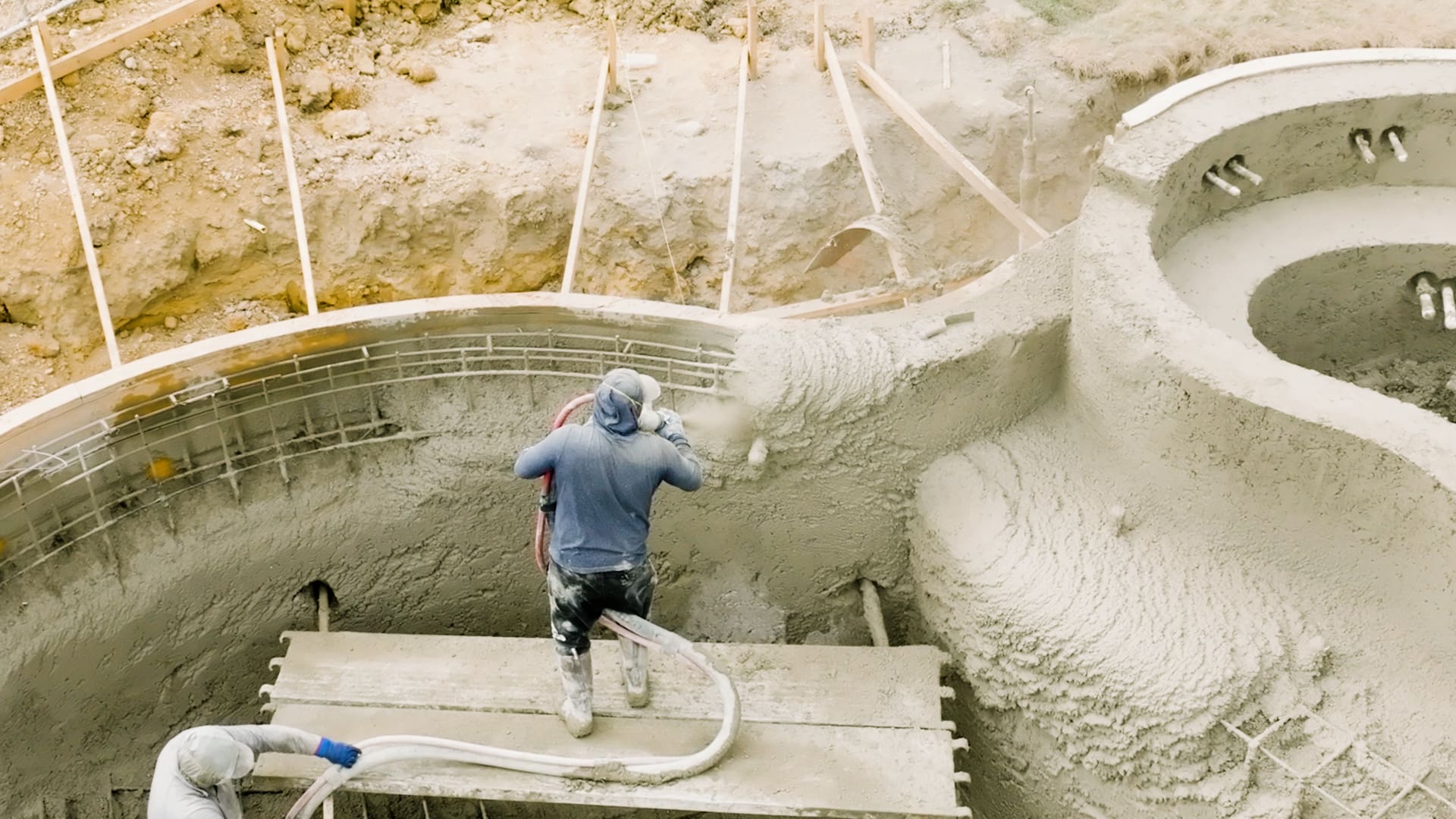
Shotcrete is applied in uniform layers, creating a watertight shell that's built to last.
As your pool builder, it’s our job to be on site throughout the process, so you won’t need to worry about things like proper cement application. But we do want to help you understand this essential detail.
The gunite pool mystique
First, let’s clear up the misperception that gunite is the ultimate luxury pool material. For nearly a century, pool buyers have considered gunite the gold standard of luxury pools. Perceptions might be different if shotcrete had been named Ultra-Gunite. Instead, the concrete industry uses the term shotcrete for both concrete application methods. The pool industry has retained the traditional term gunite for dry-mix applications and reserves the shotcrete name for the wet-mix application method. We’ll dig deeper into dry-mix and wet-mix concrete in a moment, but first let’s look at the role steel rebar plays.
Your best shot for strength and durability
Which concrete application method has the best shot for achieving lasting durability? Both gunite and shotcrete are shot from a gun. Properly applied, they are equally strong, but the chances of a missed shot are greater with gunite.
Even when concrete seems strong enough to keep pool water contained, less obvious pin holes and weak spots can allow pool water—with its corrosive power boosted by chlorine—to work its way to the rebar. When pool water seeps in, support rods are eaten away, and the damage may be hidden from sight until it’s too late.
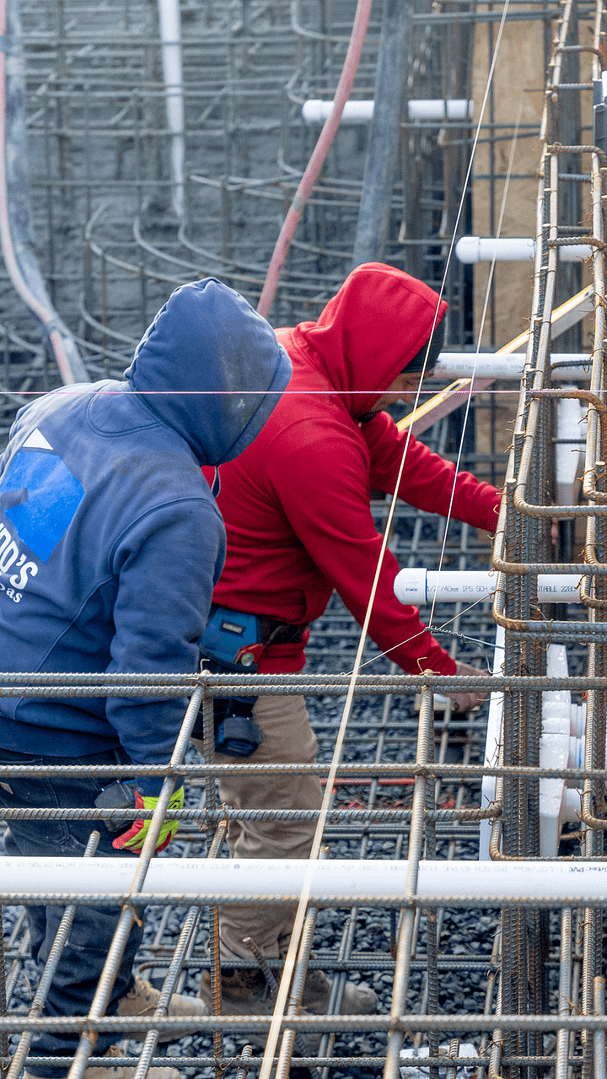
The rebar grid serves as the first layer of strength in our ultra-luxury shotcrete pools.
The dry-mix risk
To protect rebar from corrosion, your contractor has to apply a precise and consistent mixture of cement and sand. Get the mix wrong—even for a moment—and you risk compromising the pool structure.
The first mixing problem we see in the gunite process is its dependency on the skill of the person operating the gun (the nozzleman). The gunite nozzleman has to control the moment-to-moment mixture of water and dry-mix, while at the same time controlling placement of the concrete in the form. That’s a lot to expect of one person, even those who are highly skilled.
Another point of possible failure of gunite is in the dry-mix provided on the job. An onsite volumetric mixer must continuously feed the exact mixture of dry sand and cement to the nozzleman’s hose, and the nozzleman then has to continuously mix the right ratio of water into the dry material. The sand-cement mix delivered by the mixer may not remain consistent. Worse, an unscrupulous or ill-informed contractor may choose to use more (cheaper) sand than called for in the industry-approved specification.
Wet-mix gets a head start with ready-mix concrete
Once ready-mix concrete is mixed by a reputable dealer, there is no question about the ratio of sand, cement, and water meeting the builder’s specification. No potential on-site sand-to-cement mixing error. No possibility of a gunite nozzleman’s water-to-dry-mix going off-spec. The shotcrete nozzleman is free to focus on accurate and uniform placement of concrete in the rebar framework, and that’s enough responsibility to put on any nozzleman.
Depending on soil conditions, a custom mix of concrete additives may be required. A change in weather on the day of application may also require additional additives. In both cases, ready-mix makes it easier to incorporate additives, eliminates waste and improves even distribution of these important but expensive additions.
Compressive strength tests
There is a standard test of compressive strength for shotcrete and gunite applications that provides an accurate measure of a new pool’s durability and watertightness. The American Shotcrete Association (ASA) and the American Concrete Institute (ASI) specify 4,000 psi (pounds per square inch) for all pools. In their Position Statement #1, the ASA Pool and Recreational Shotcrete Committee concludes:
“We firmly maintain that the 4000 psi (27.6 MPa) minimum 28-day compressive strength that meets the ACI 318-08 Building Code requirements is necessary to produce durable, water-containing pool shells that our owners deserve and expect. Specifying any lower compressive strength does a disservice to the owner and the pool industry.”
Depending on the Exposure Class a higher rating may be required. For example the potential for salt water exposure necessitates a minimum 5,000 psi for pools built at the shore, though some builders don’t comply. ASA states 5,000 psi is routinely achievable by those who pay careful attention when applying shotcrete. At Budd we pay very close attention to materials and placement techniques, and all our custom shotcrete pools are built to meet the higher 5,000 psi test standard.
Concrete test panels
Test panels consist of 2×2-foot concrete collection boxes. Throughout the day, an independent engineer asks the nozzleman to shoot a sample into one of the test boxes. At the end of the day, the engineer takes the samples to a lab. Samples will be tested for their compressive strength over a period of 28 days, at which point the engineering firm certifies the concrete strength and produces a final report.
Some contractors may game the test, especially with gunite, where cement, sand, and water mixtures are easily changed on-site. The game can be played by shooting all the samples at once with the specified ratios, then adding more sand for the pool shoot. Another way to pass the test is to set the compressive specs lower. In climates where pools aren’t subject to winter freezing and thawing, a compression strength of 2,500 psi is considered acceptable by some contractors, though ASA says 4,000 psi should be the norm for all pools.
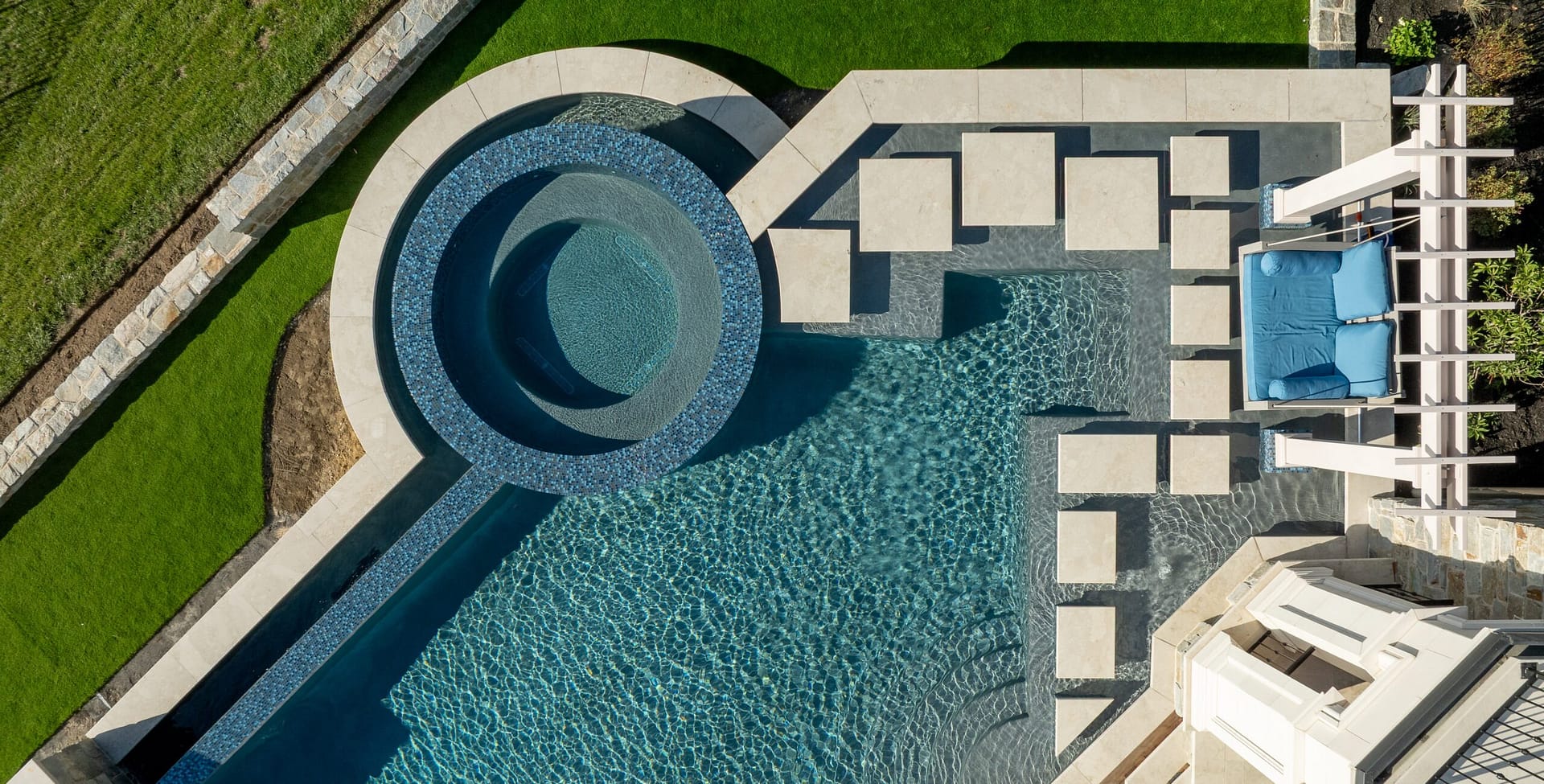
The no-worry ultra-luxury pool
This Ultra-Luxury Budd pool and spa, with its dramatic curves and angles, is built to last with durable wet-mix shotcrete.